
Ten Thousand Transactions
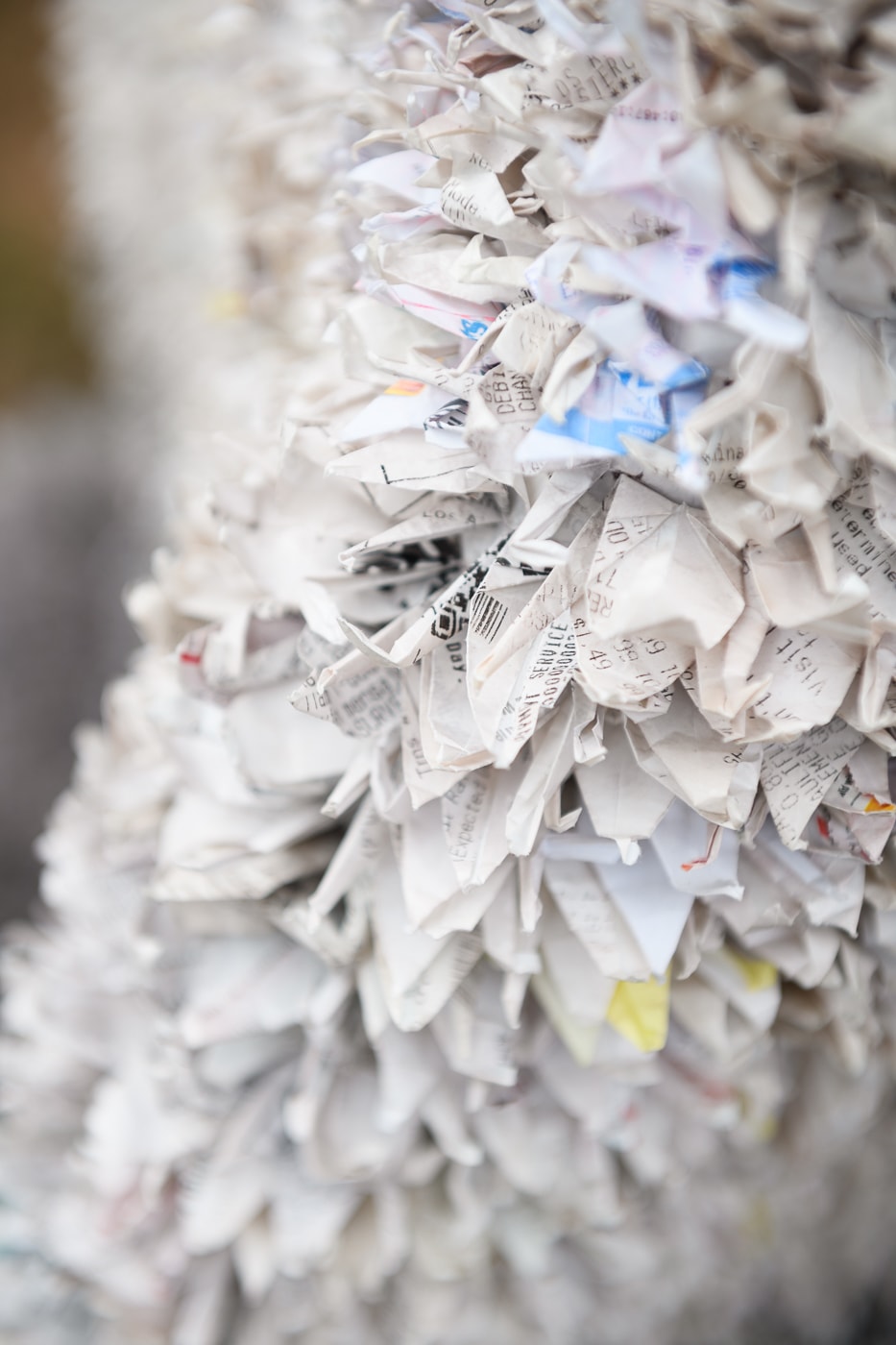
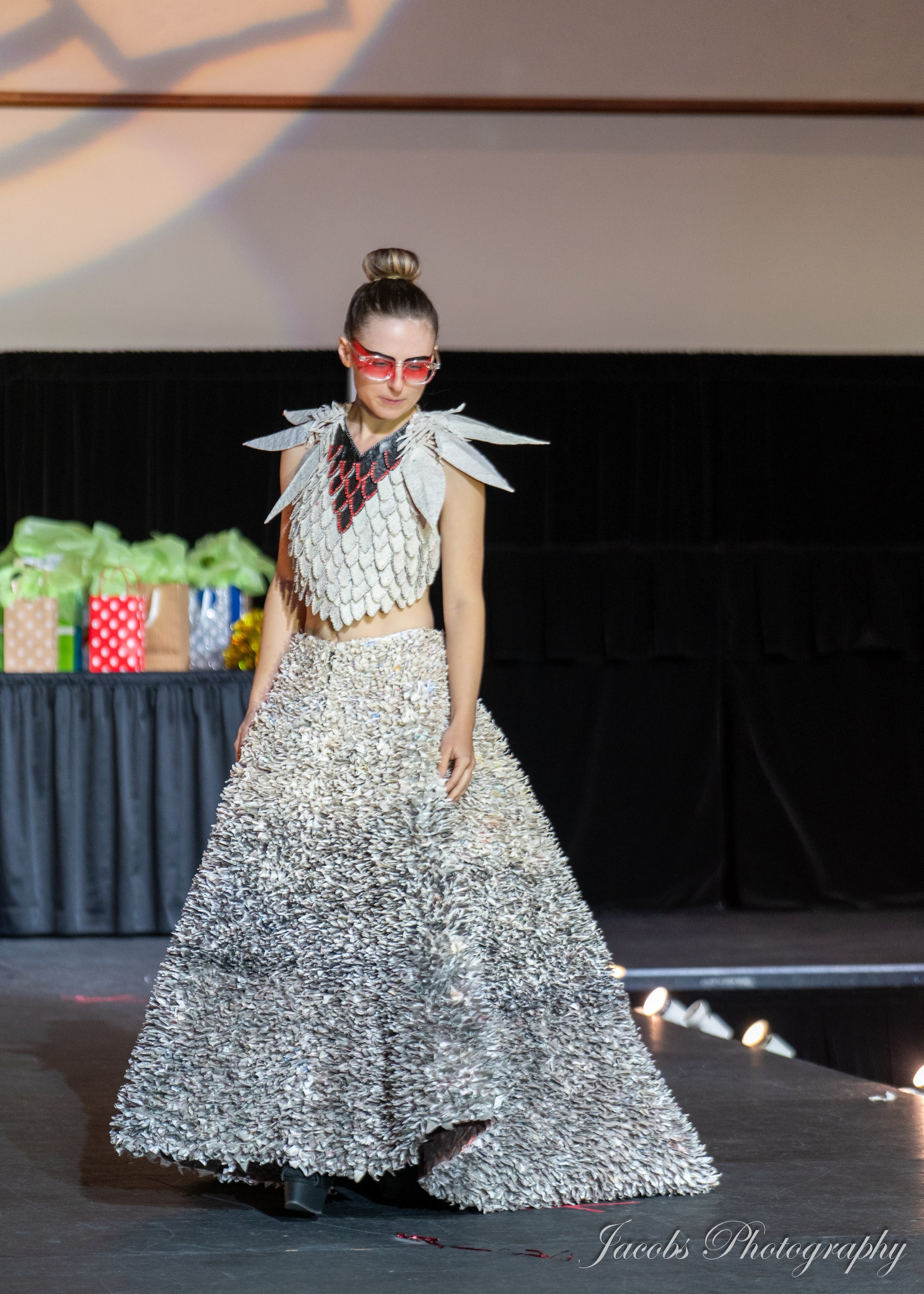
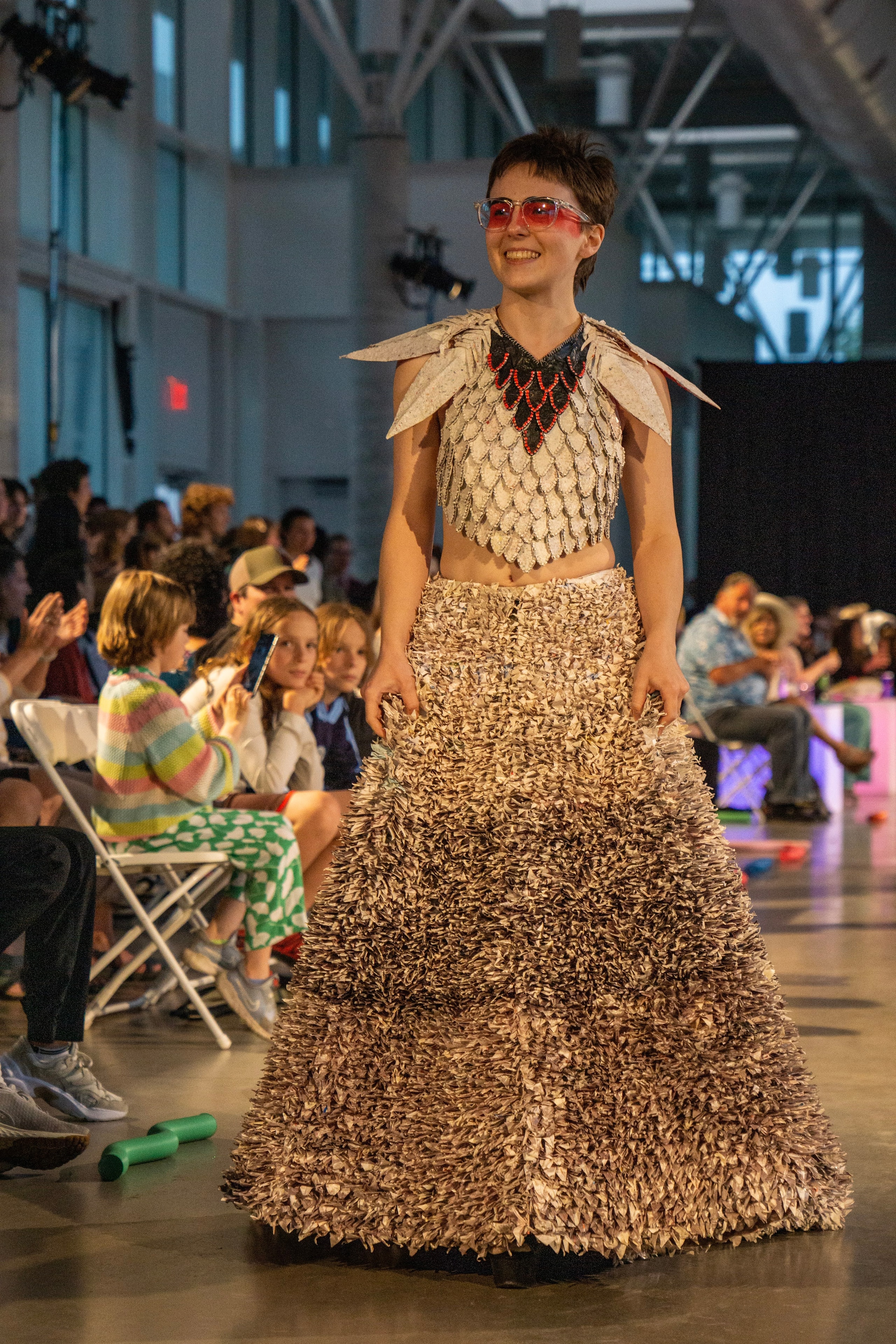
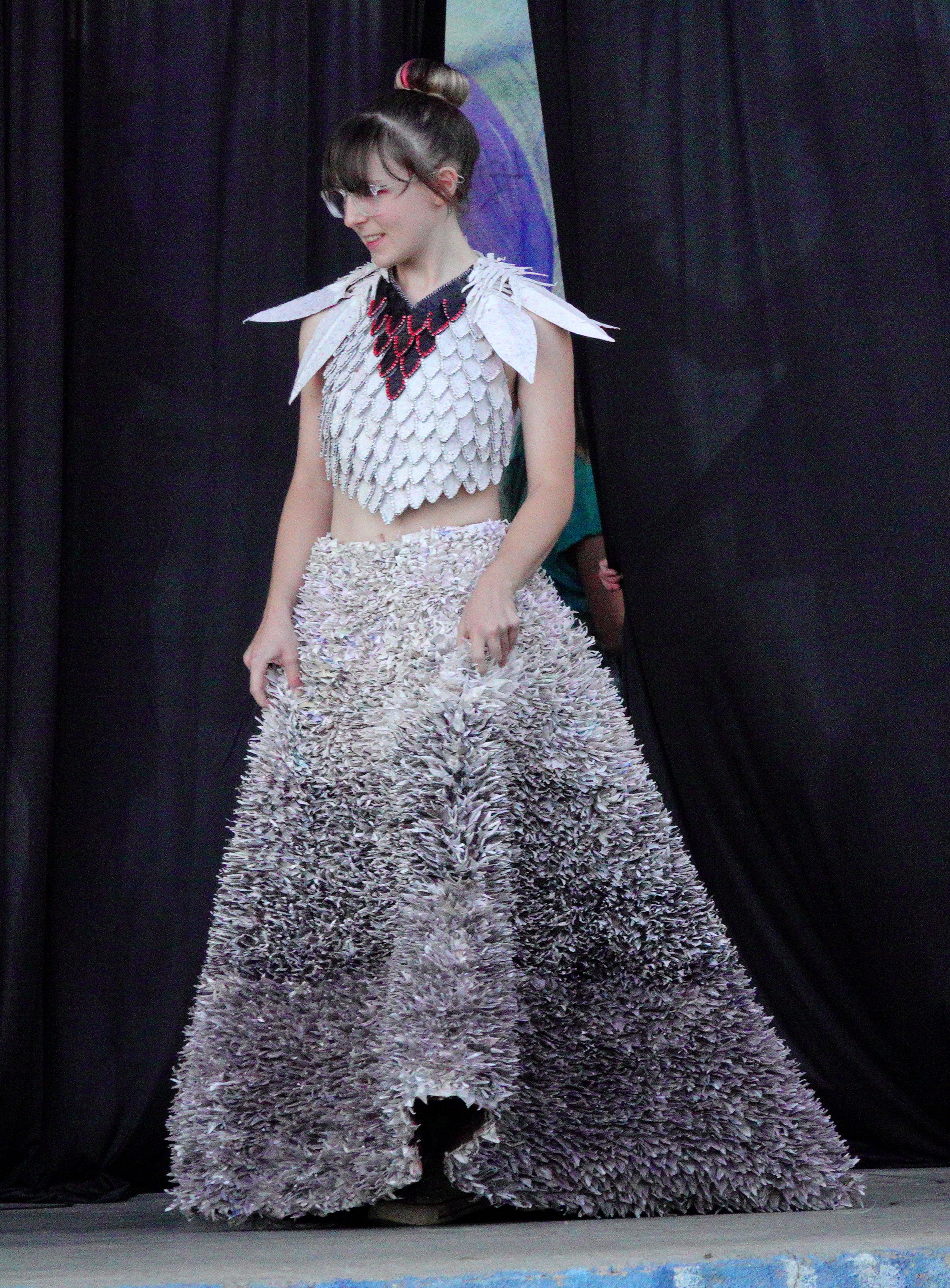
A dress made entirely out of receipts, featuring 10,000 origami cranes
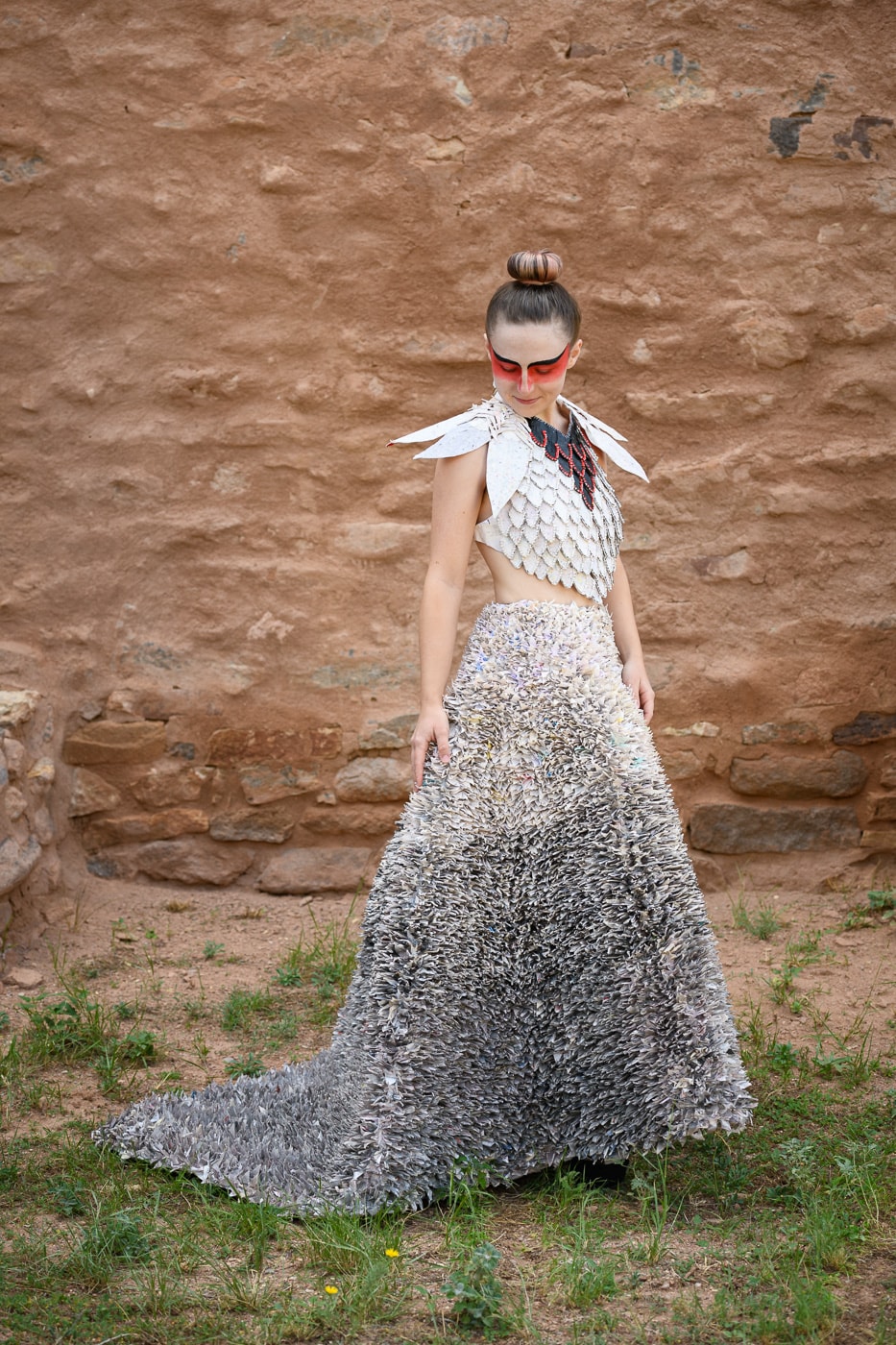
Shown in 5 different recycled fashion shows throughout 2 states
Creation process
Collecting the receipts
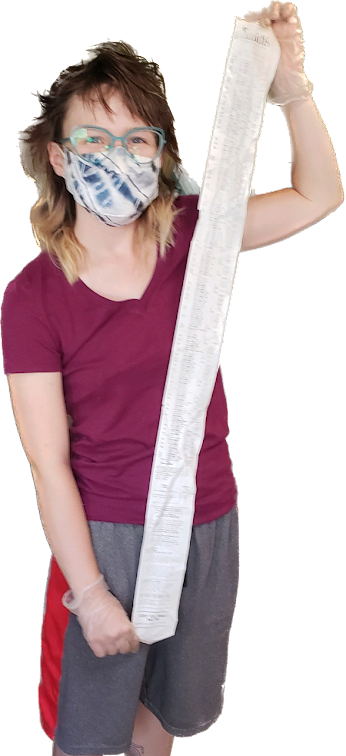
The longest receipt I found produced 12 squares, and was around 38 inches long. This was one of 4,600 put into the entire project. On average the receipts could give me 2 or 3 paper cranes which is between 7 and 10 inches long. They come in two different sizes as well, two inches wide and three wide.
The longest receipt I found produced 12 squares and was around 38 inches long. This was one of 4,600 put into the entire project. On average the receipts could give me 2 or 3 paper cranes — between 7 and 10 inches long. They come in two different sizes: two inches wide and three wide.
Utilising the scraps
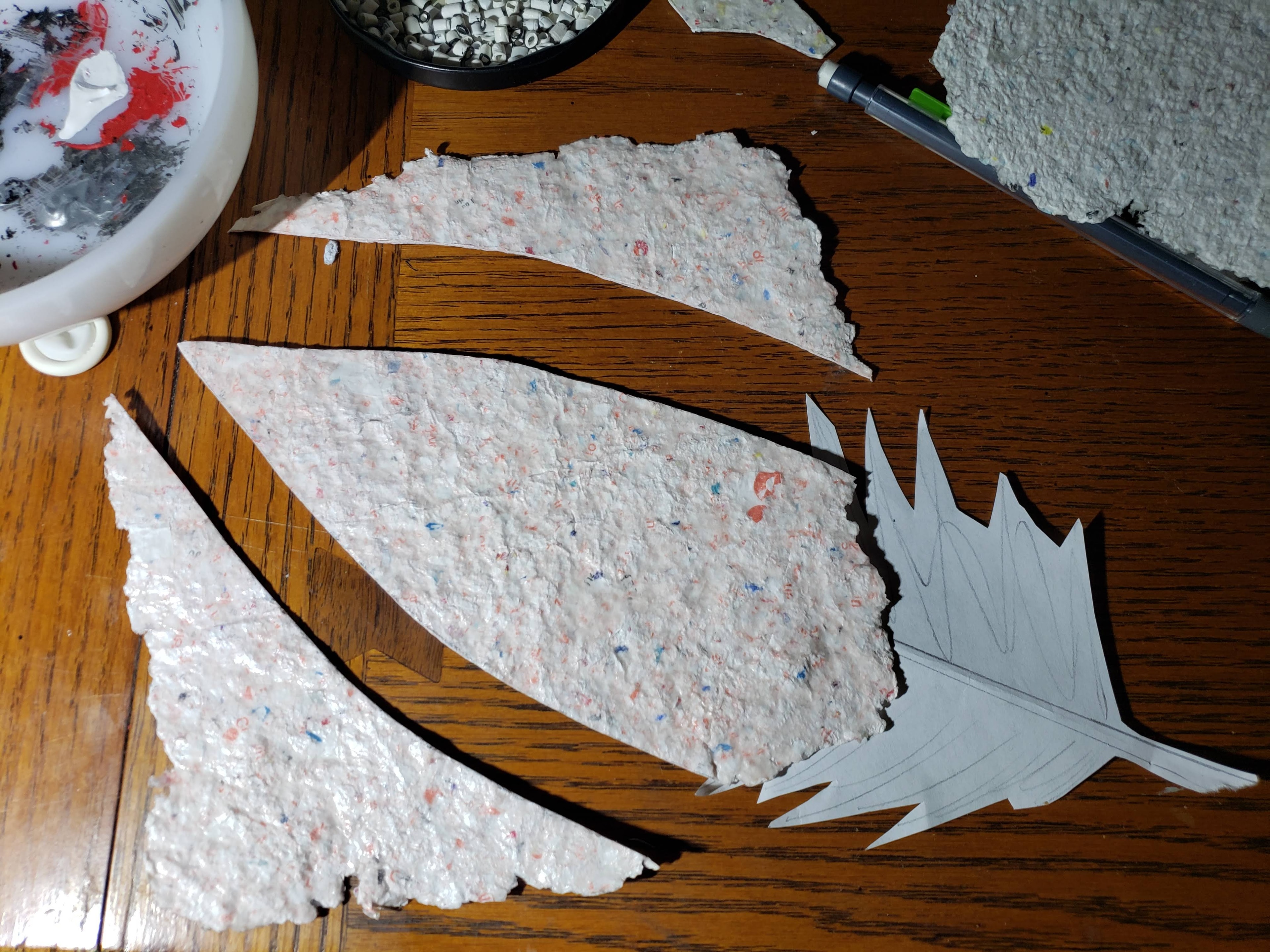
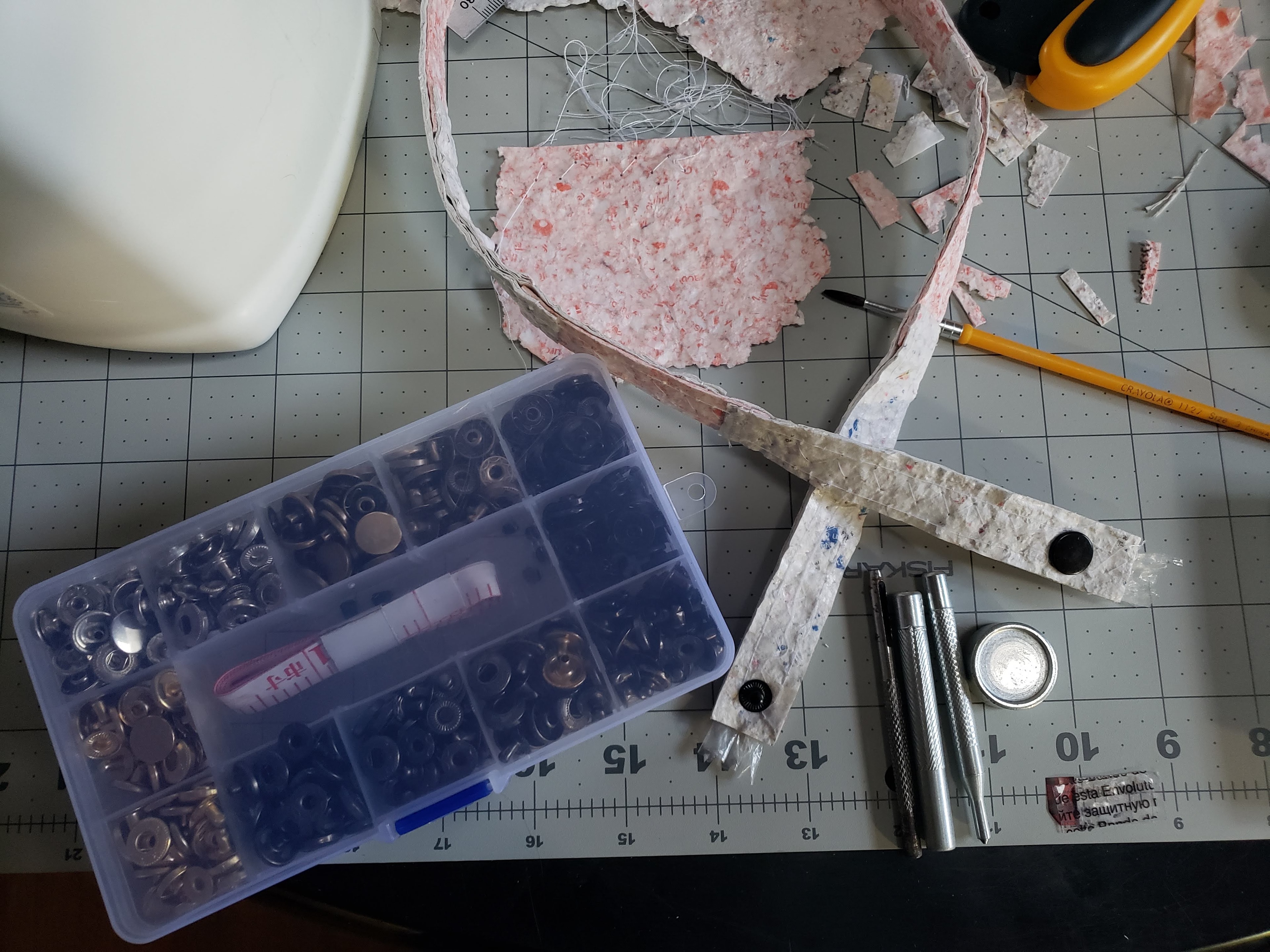
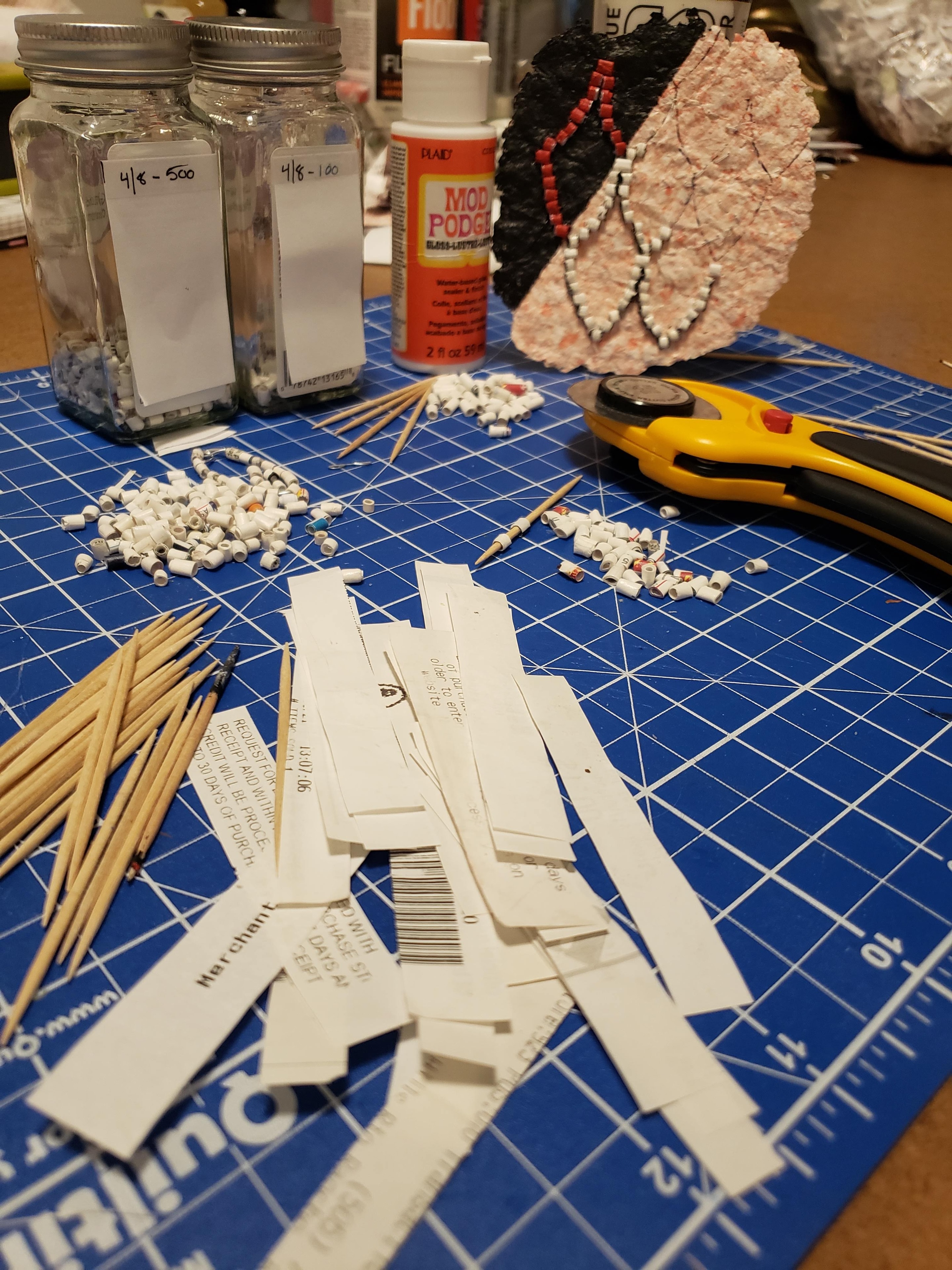
After I cut up each receipt, I would save the little scraps for later. They became handy for making paper, beads, and even the bodice.
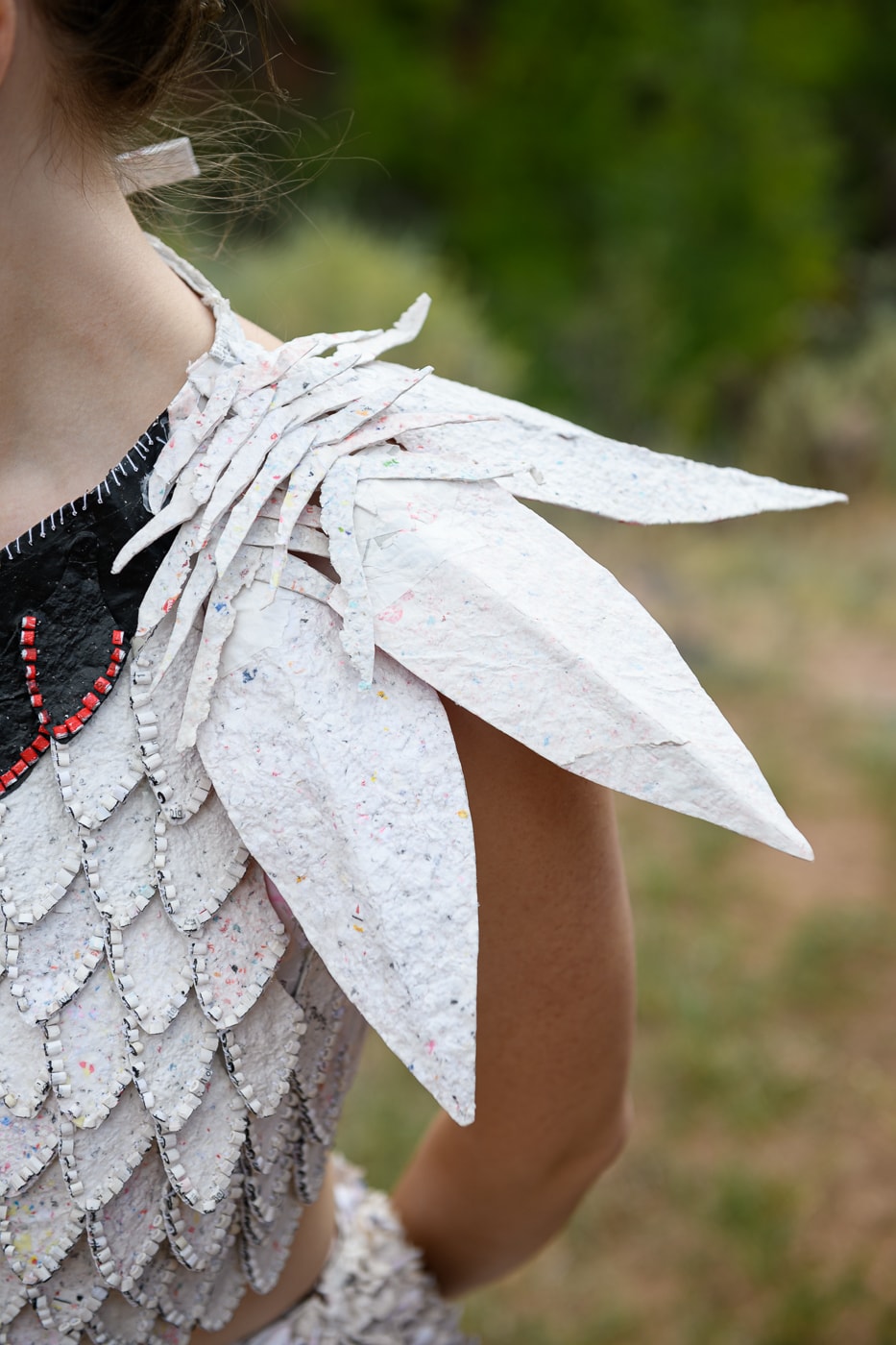
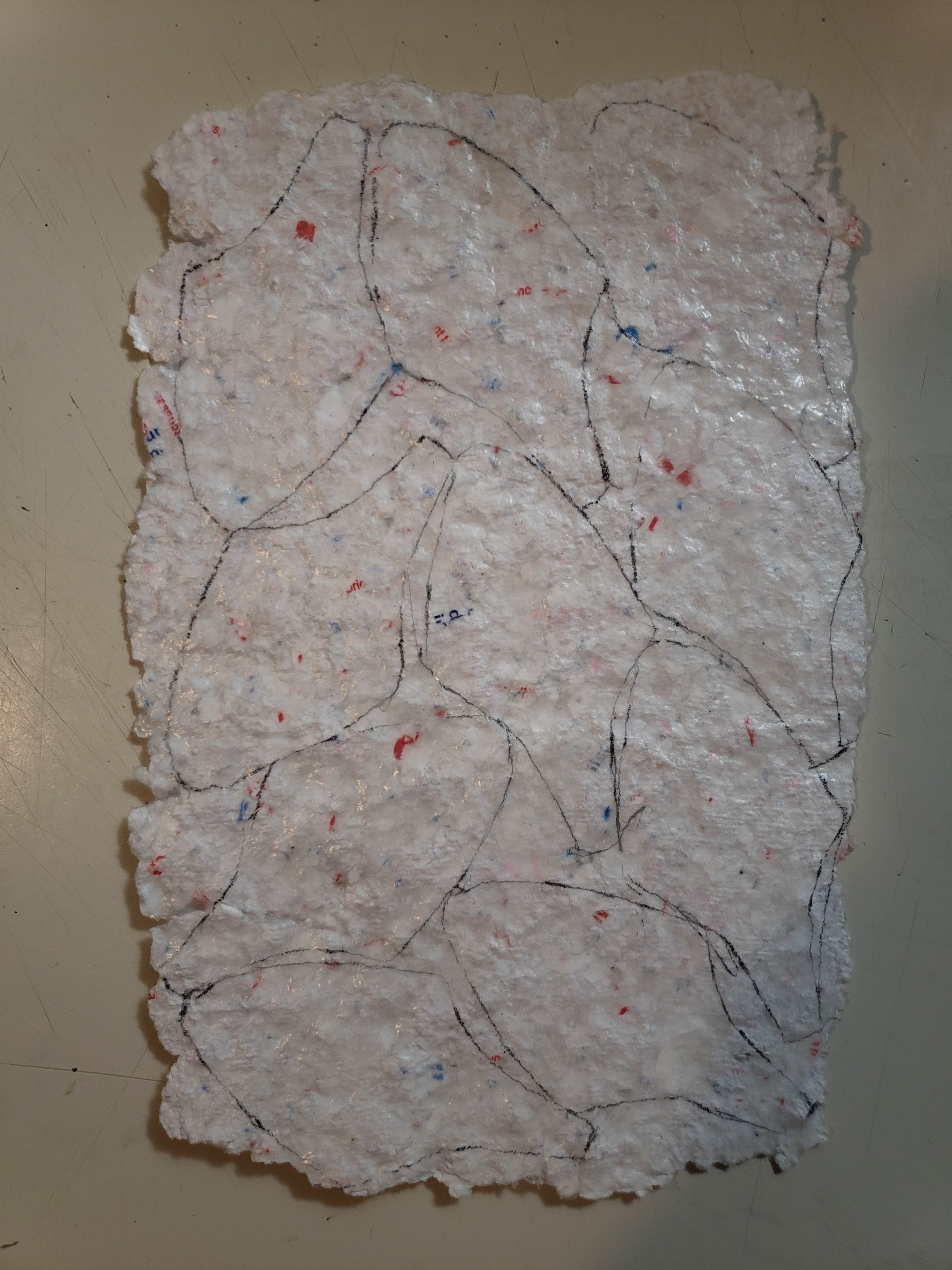
By blending the scraps up inside a coffee grinder, I was able to remake the paper in my own unique way. I would then soak the pulp in water and pour it over a screen. I shaped it, sponged the water out, let it dry, and ultimately glued both sides to prevent it from falling apart. This multicolored and thick new paper would be perfect to cut shapes out of. Feathers to be more specific, both small and large.
Bead work
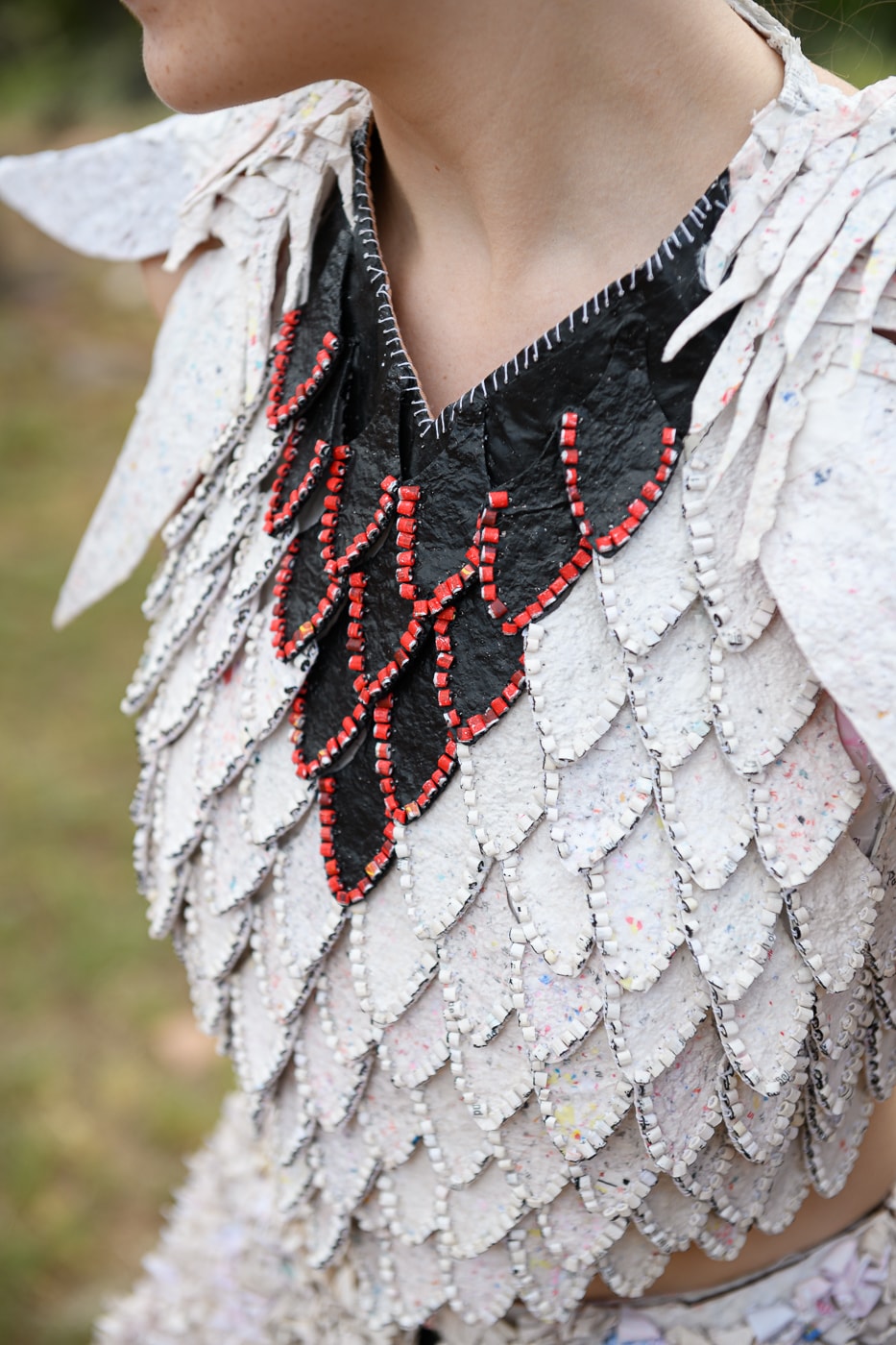
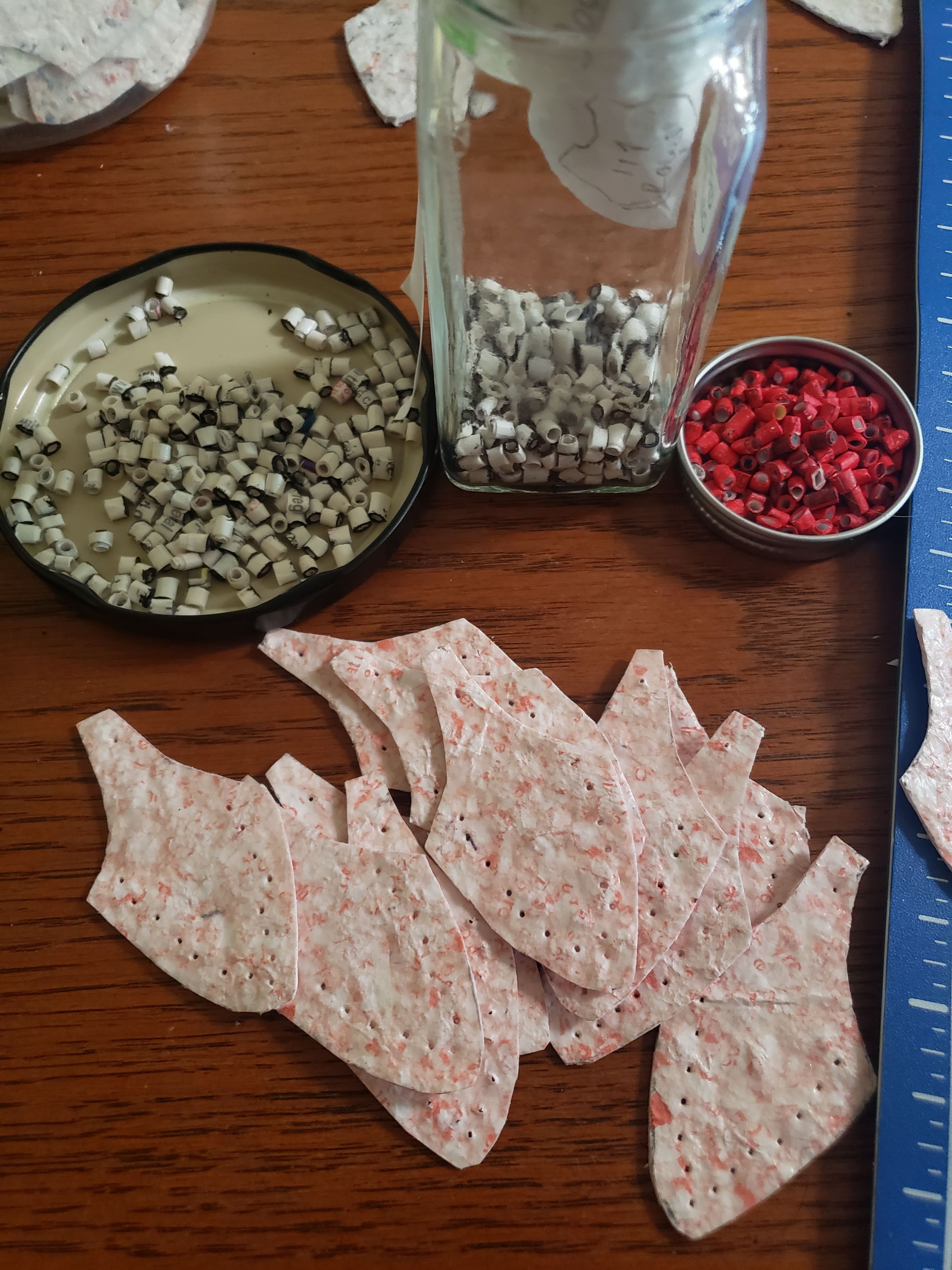
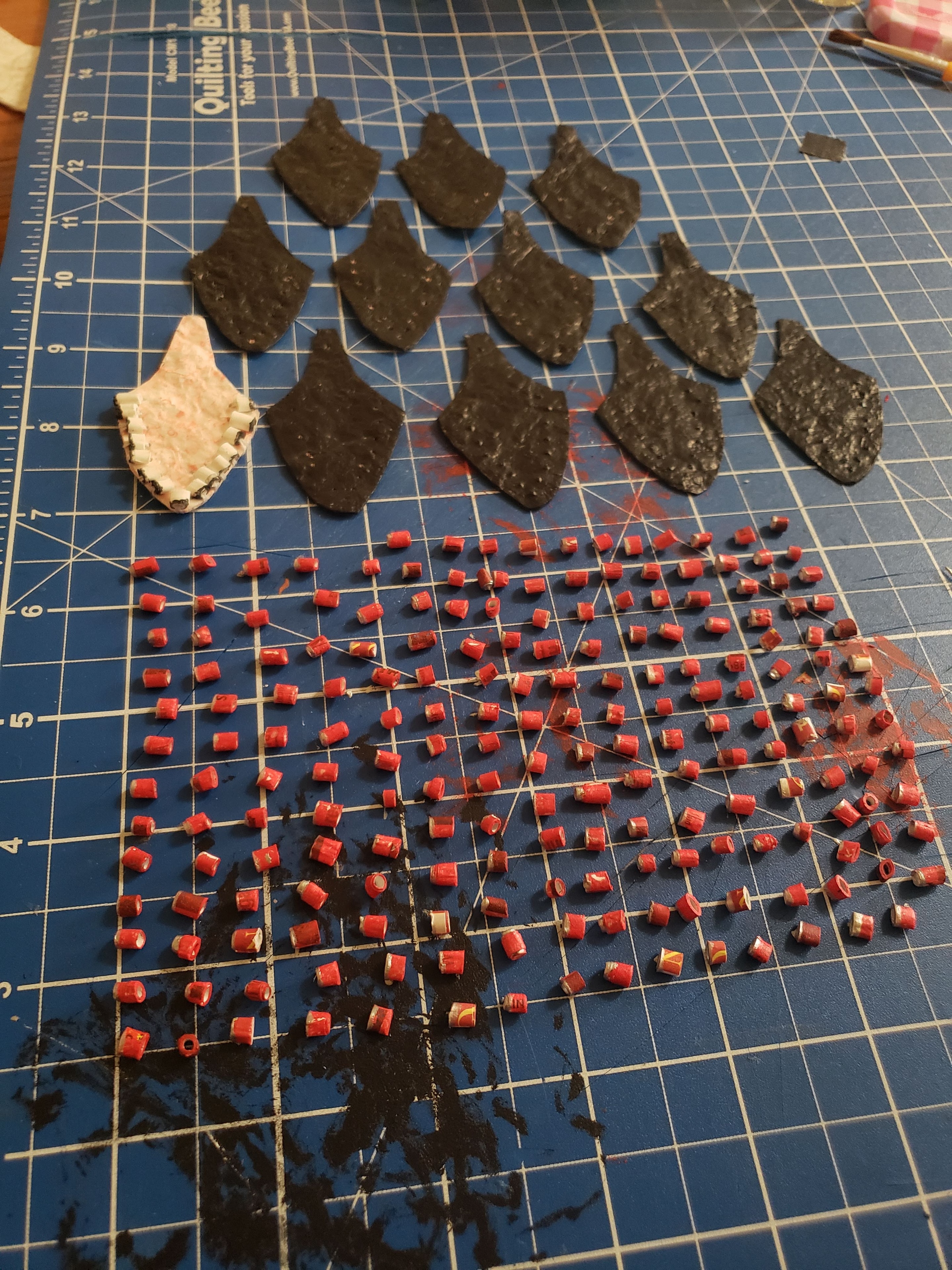
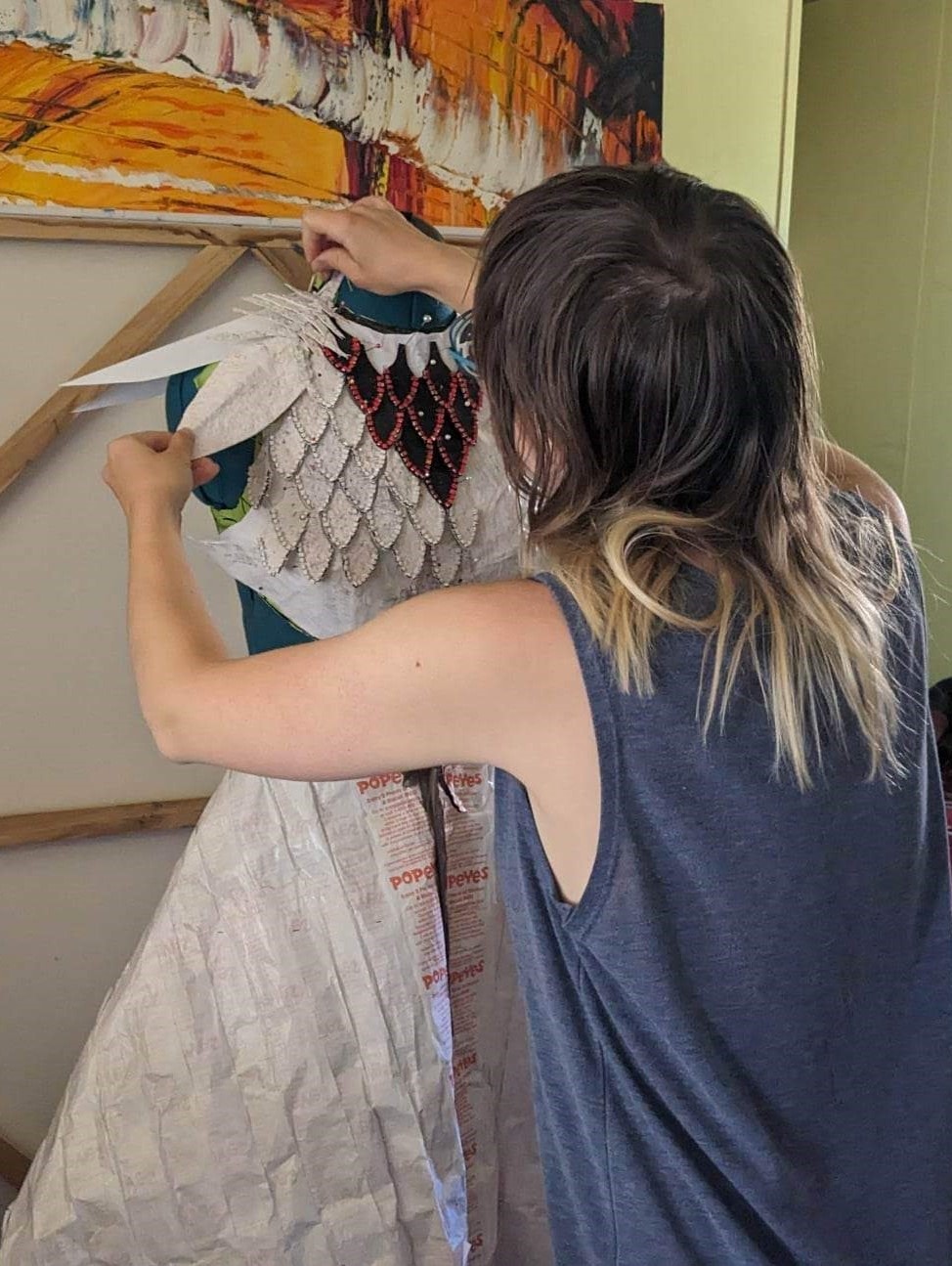
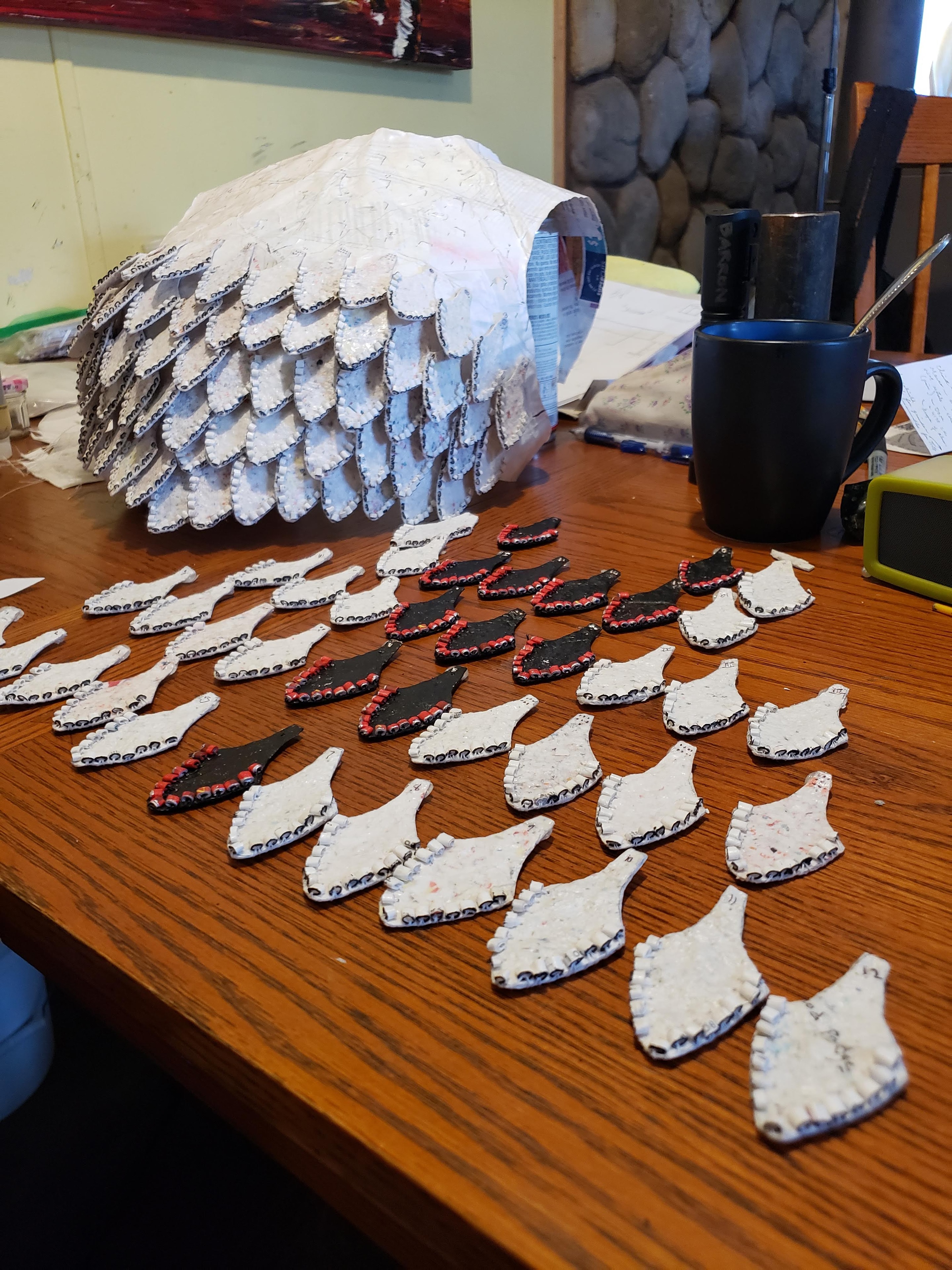
All of the small feathers were embroidered with beads. To make them, I took a toothpick and carefully rolled some paper around it. As I rolled, I added a little bit of mod podge to it in order to bond it all together. After it dried I painted each one on an edge, either black or silver. This made them pop in a subtle way. Then I sewed the beads onto each of the feather's edges. They took anywhere between 10 and 20 minutes to embroider. There are approximately 1,650 beads on the garment's bodice.
Bodice creation
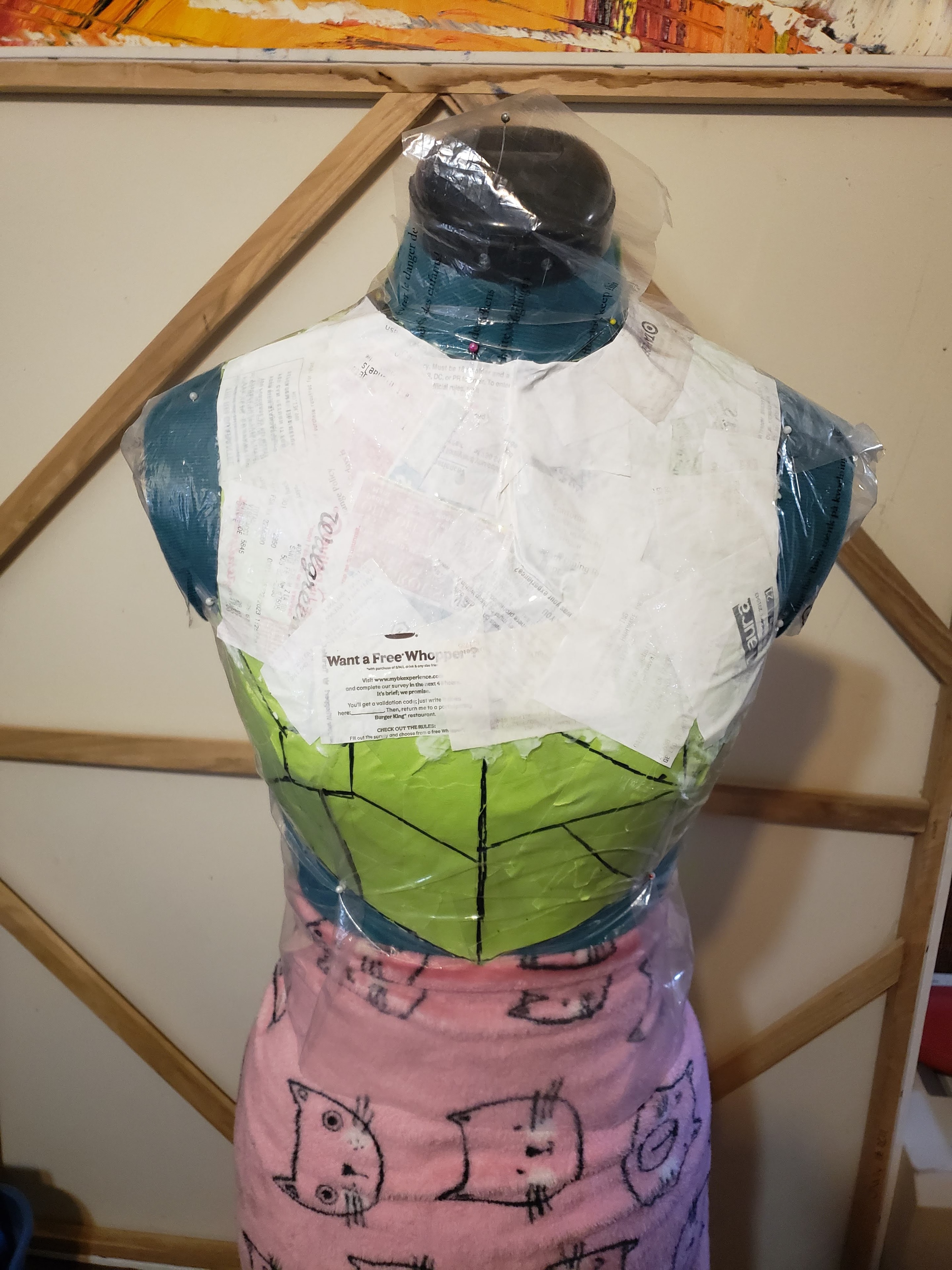
Once all the feathers were embroidered, I needed a bodice to sew them onto. To make it, I paper mâché my mannequin, which had recycled plastic draped over it. After layering it with receipts and glue several times, I was able to take it off and start hand sewing the feathers on.
Assembling the skirt
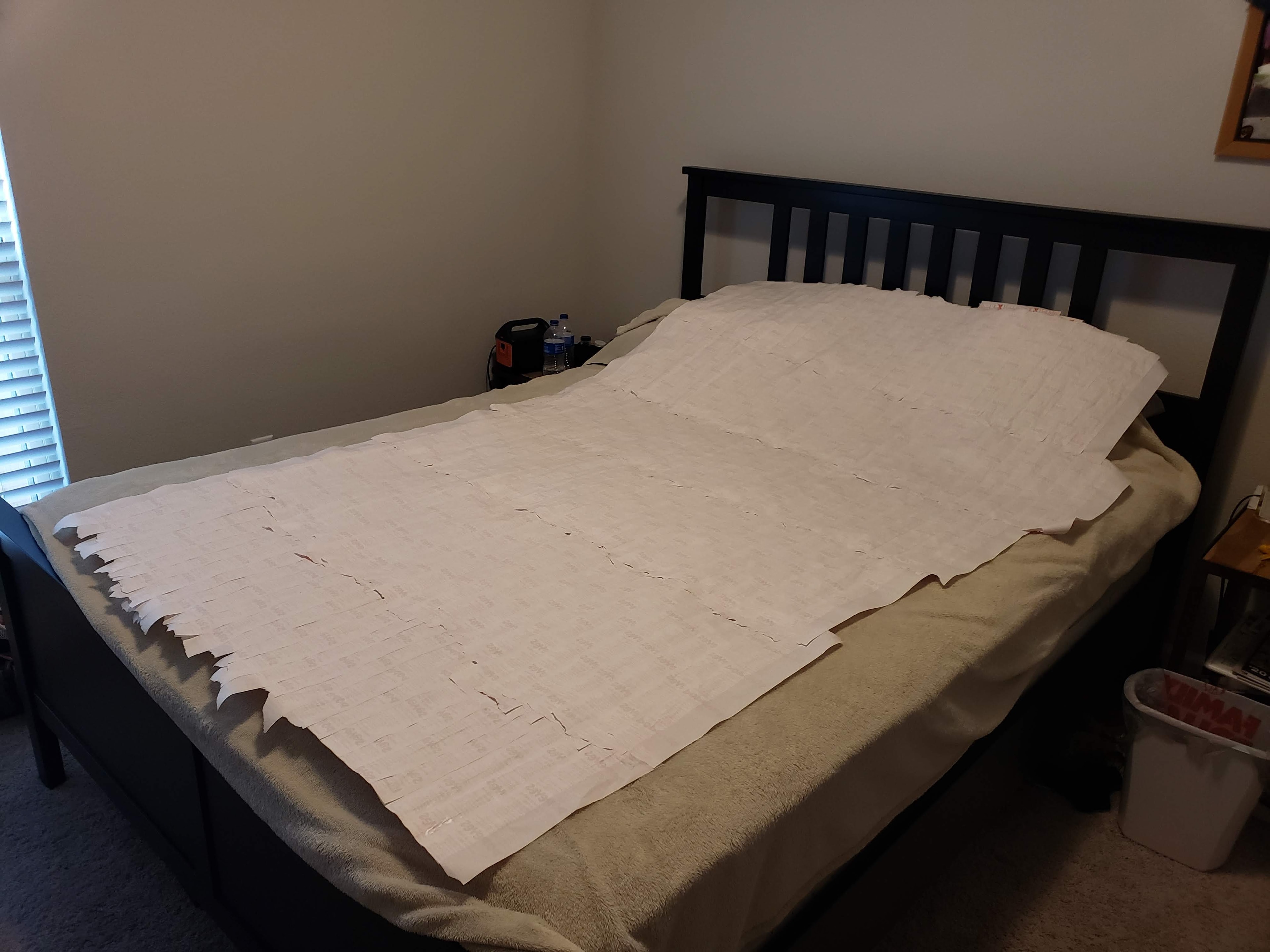
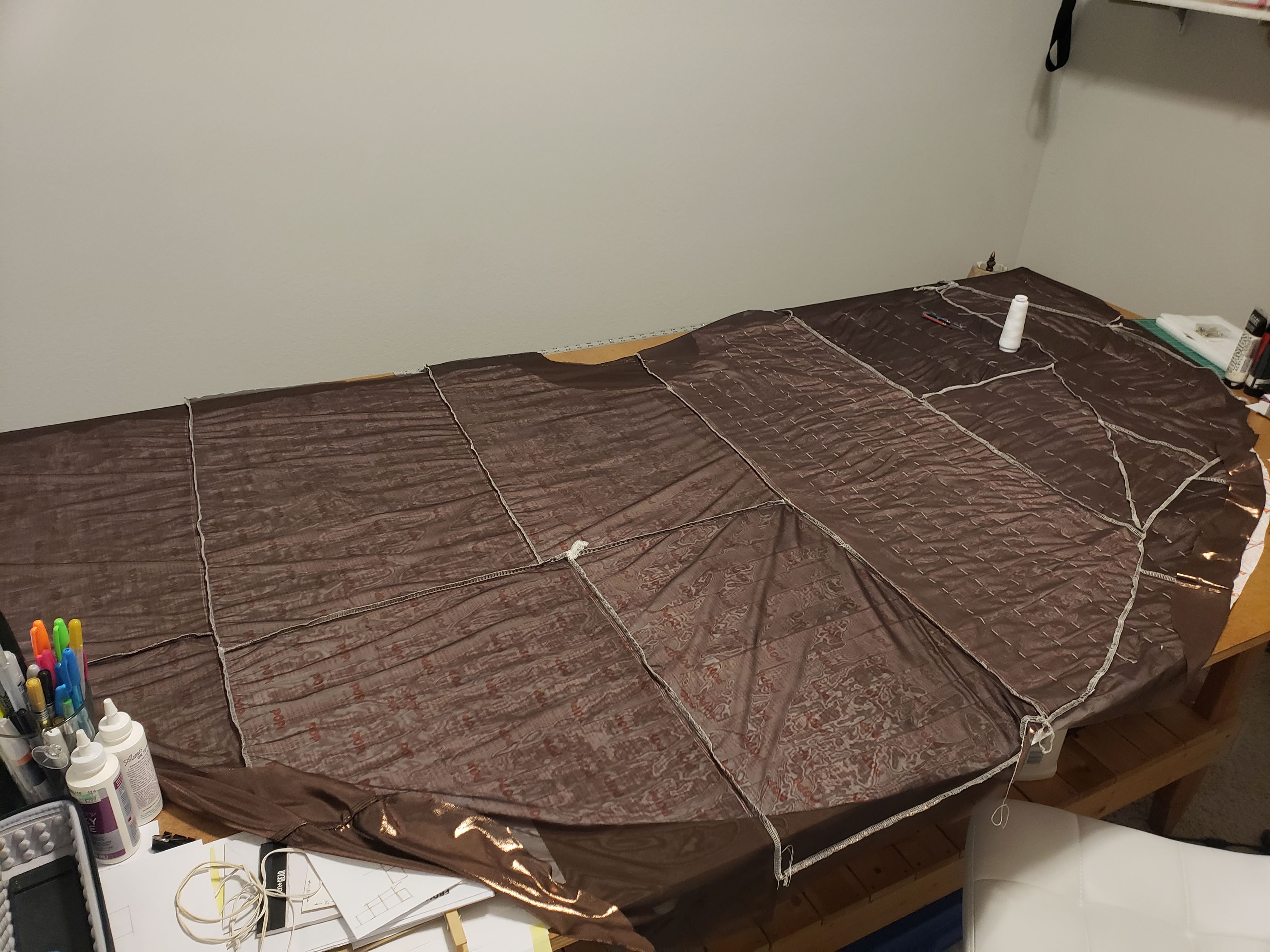
While thrift shopping one day, I found a ton of rolls of Popeye's receipt paper that had been printed in 2012. I couldn't pass on taking them so I grabbed some and used one for the skirt. By overlapping them halfway across each other and gluing them together, I created a giant sheet of paper. It was the perfect size for a half circle skirt, not too big or too small. Once that was done, I wanted to make a lining because I knew that the paper would not hold up after sewing the origami cranes to it. The lining was made of a brown stretchy fabric I collected from my old job's scrap bin.
Colorization
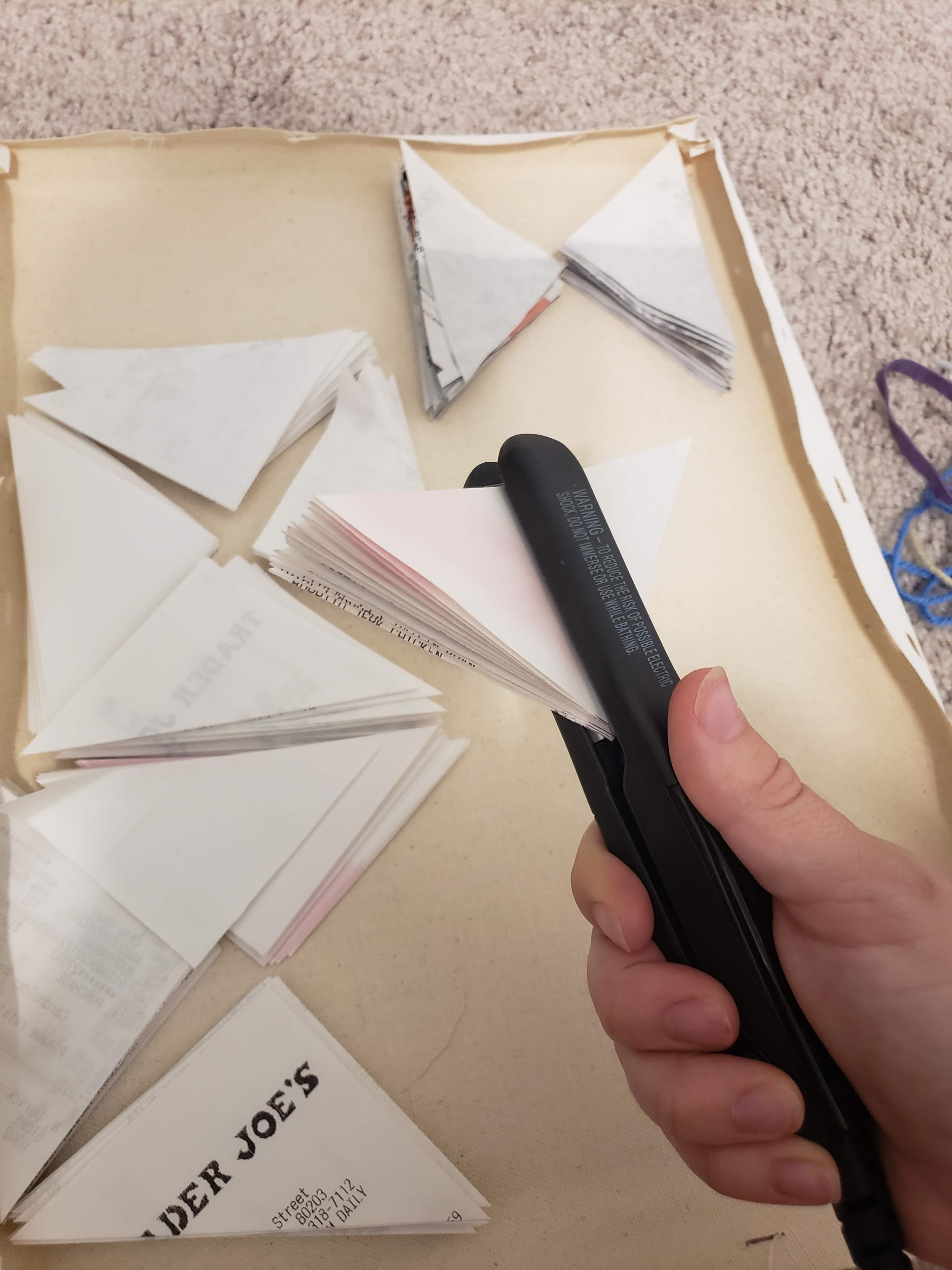
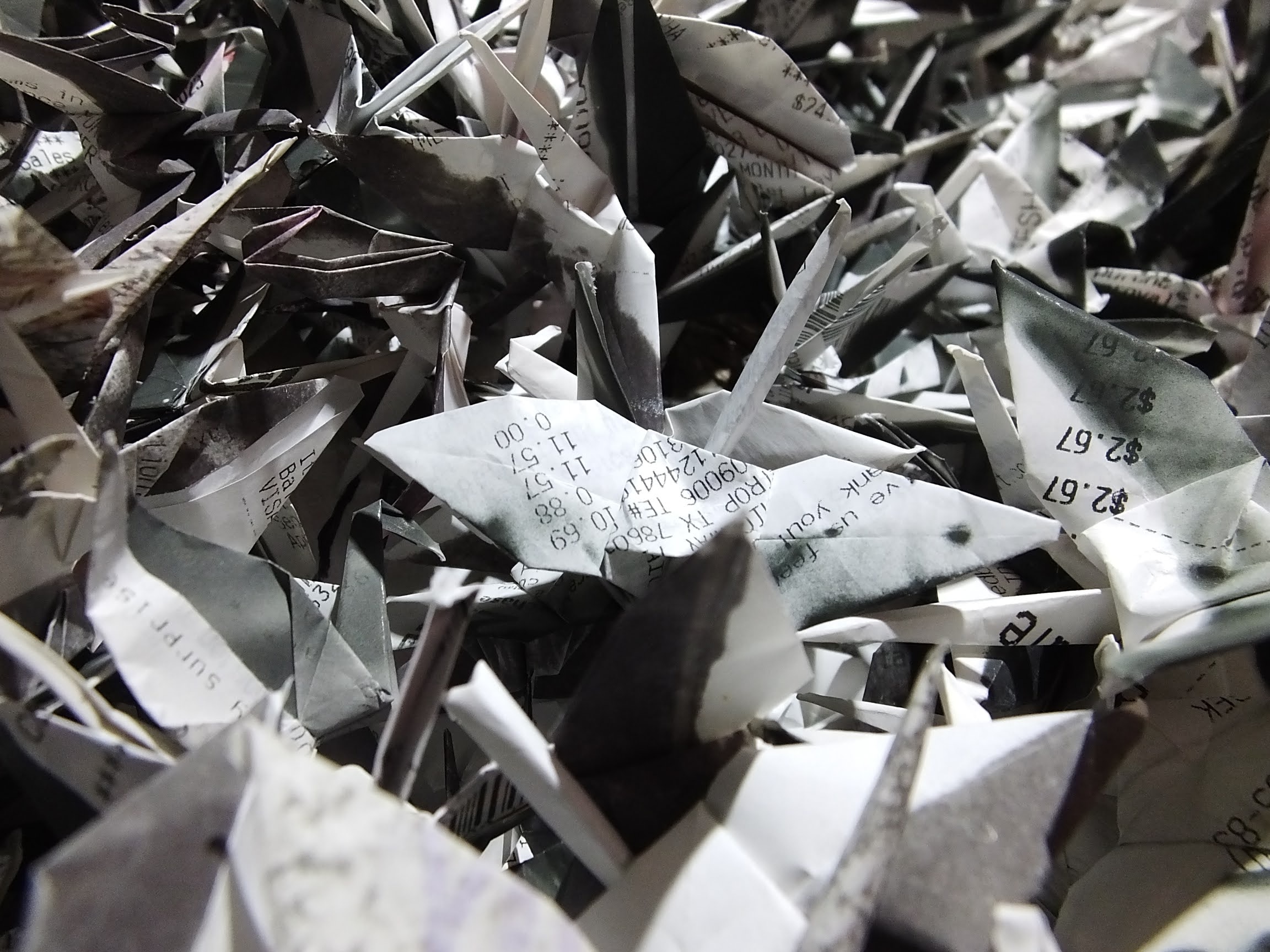
After the skirt was made and I had folded all 10,000 paper cranes, I began to sort and color them. I took 3,000 and used the heat from a hair straightener to make half of each crane black. From a distance it would give the illusion that they were actually gray. For some of these, I was able to color them before folding.
Experimenting
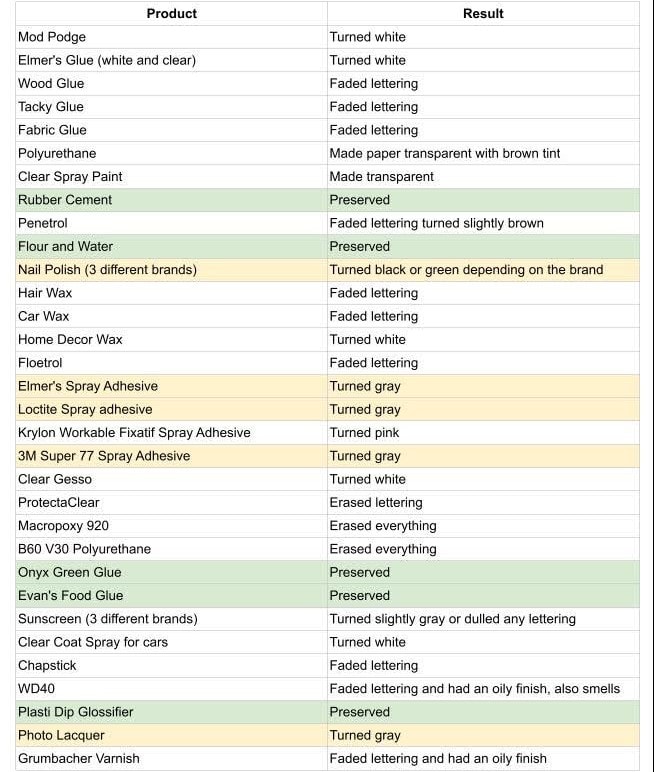
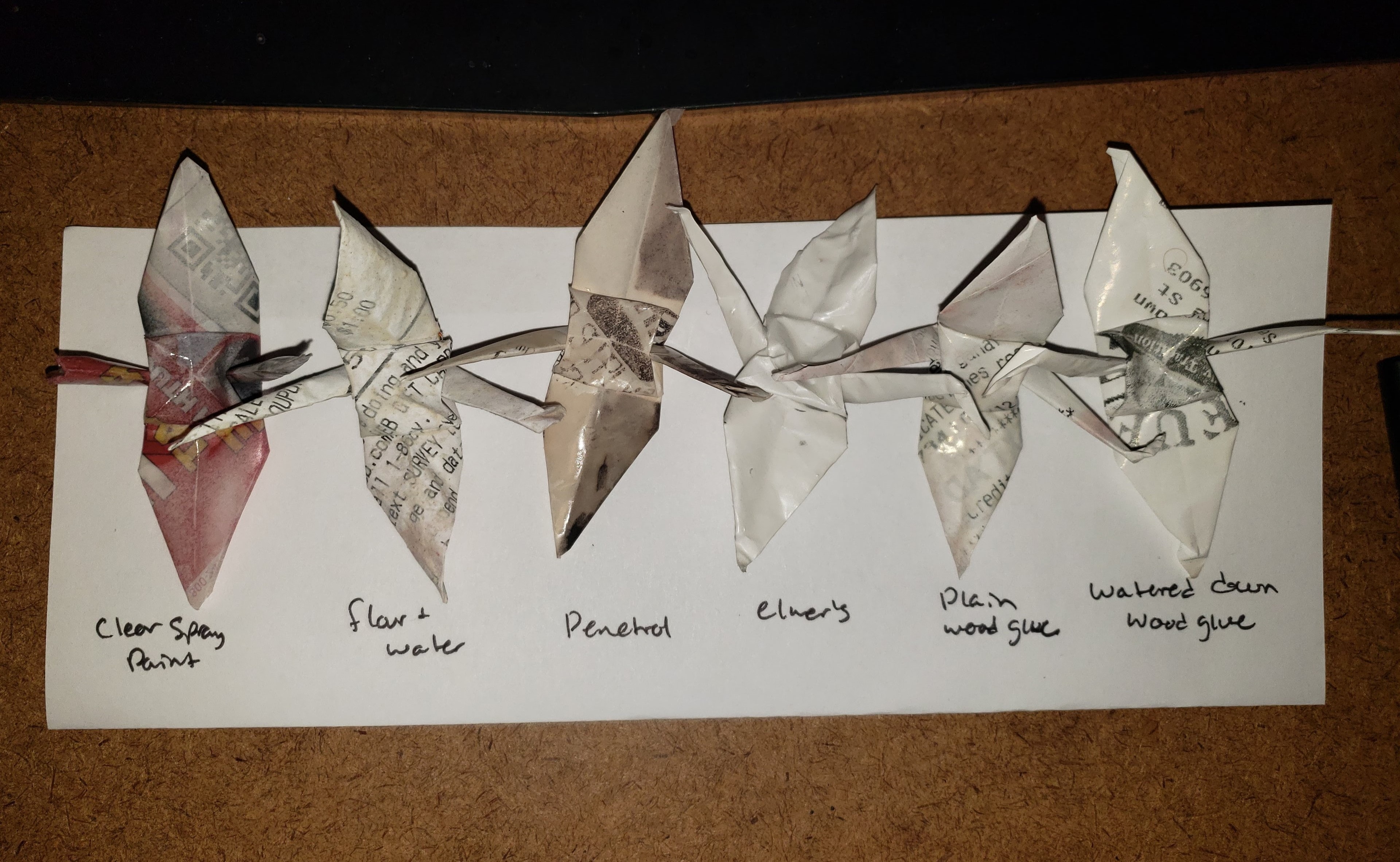
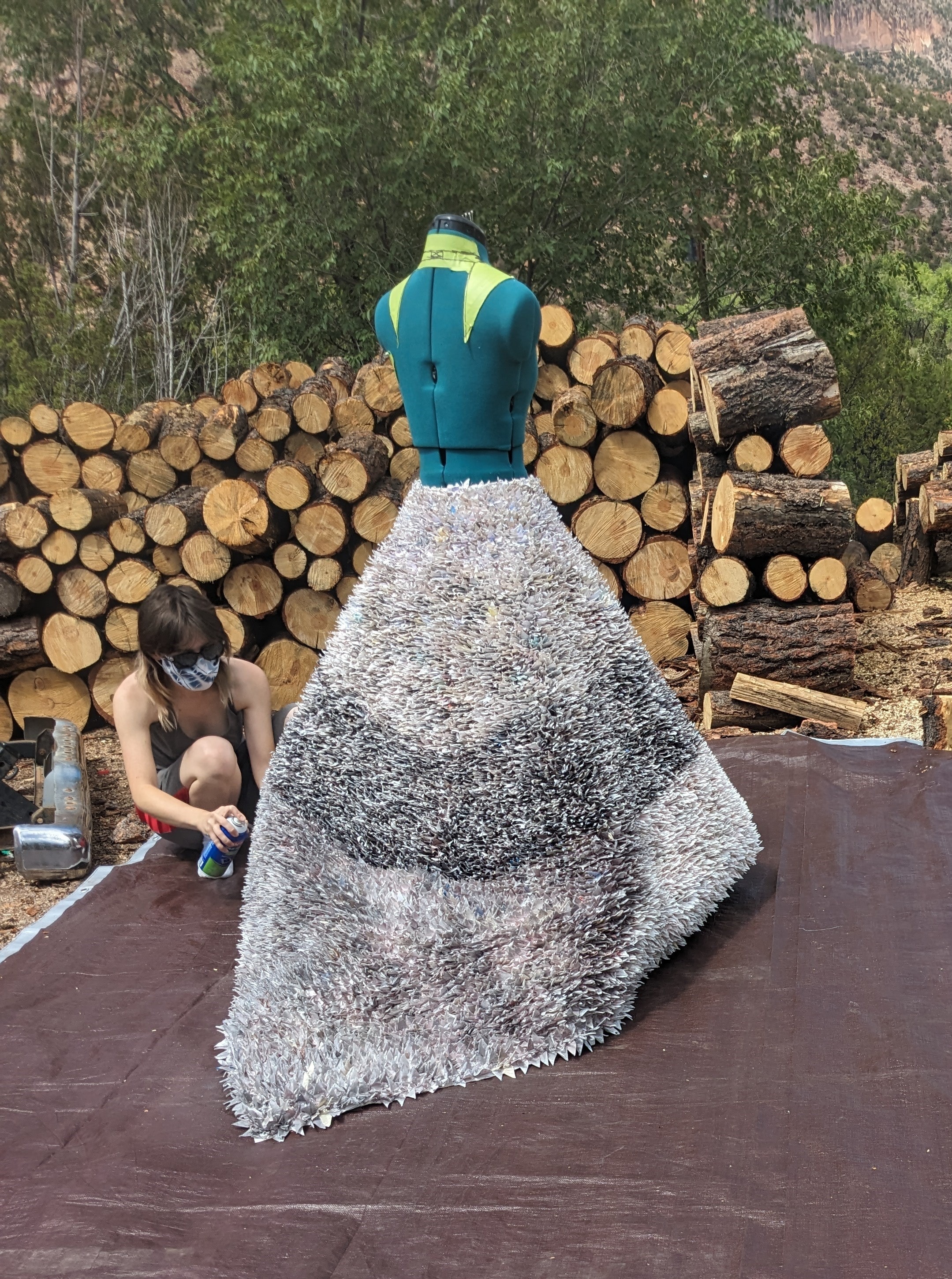
During the whole process of making this dress, I was experimenting with products that preserve or change the color of thermal paper. The goal was to find one that I could easily apply to the white and gray cranes in order to protect the wearer from BPA exposure, and one that would transform the receipt cranes into either dark gray or black. What I ended up using was Plasti-Dip Glossifier to seal the white and gray cranes, and Loctite spray adhesive to change the color of the other 5,000. This was done after they had been sewn onto the skirt.
Sewing the cranes on
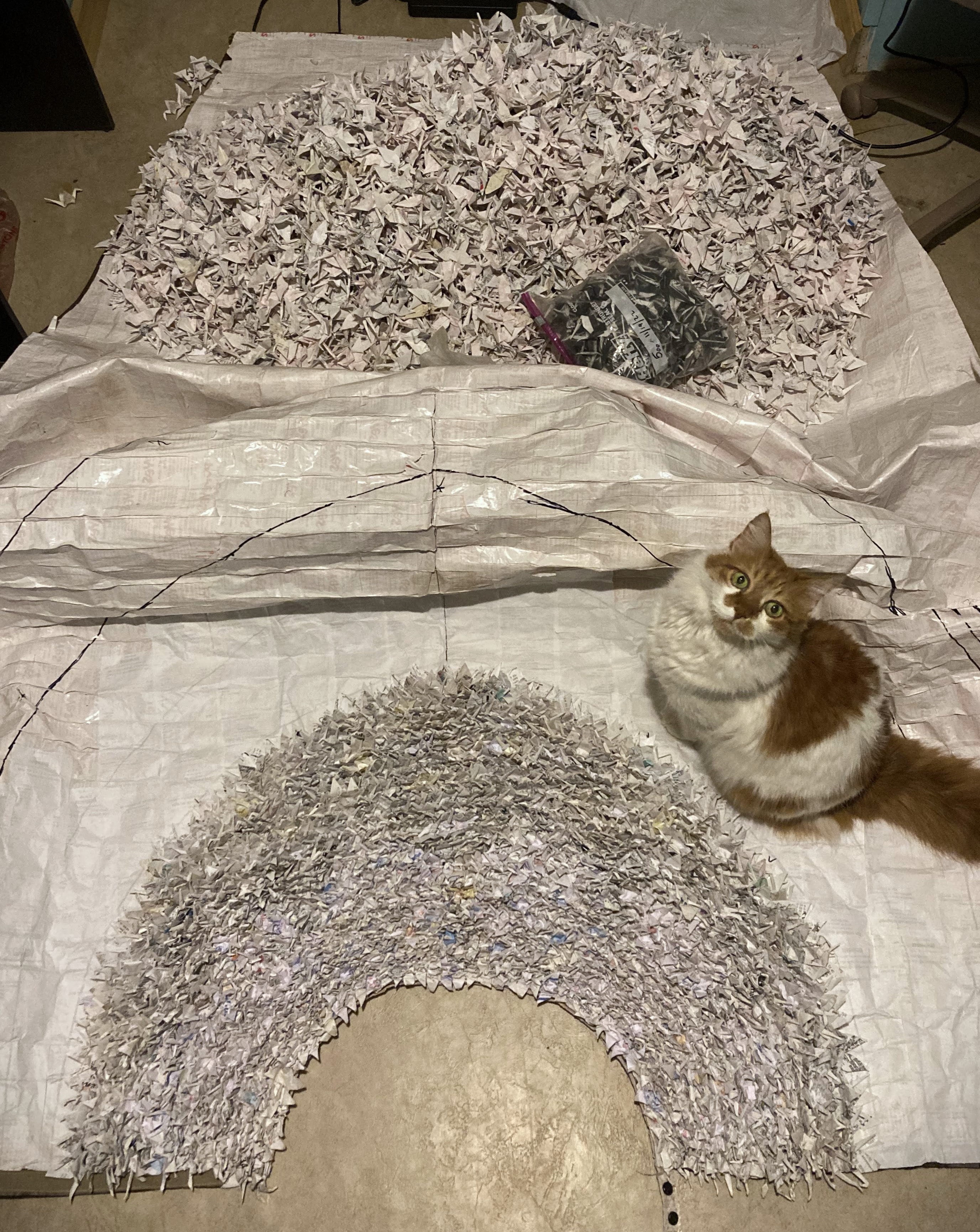
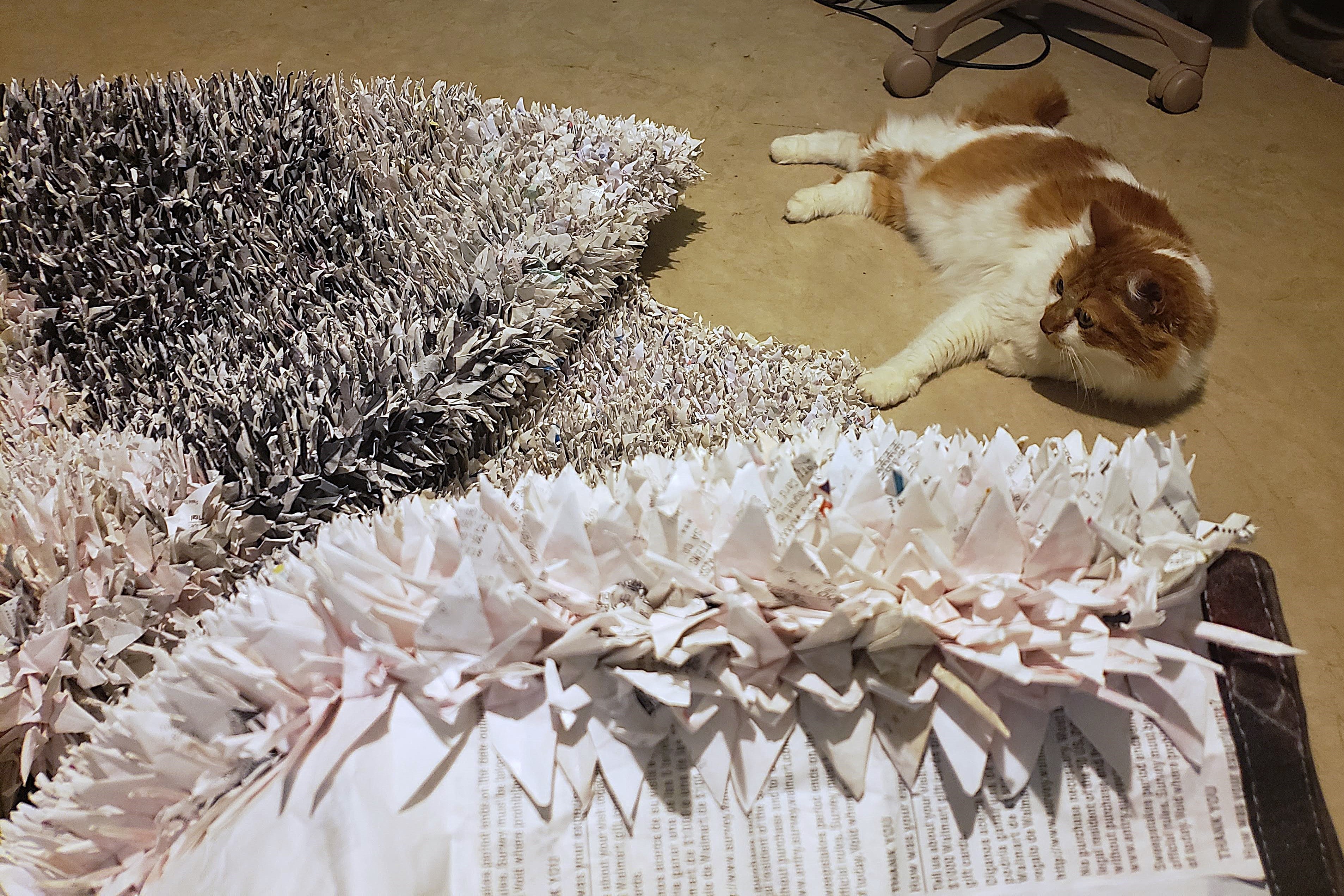
Hand sewing each crane to the skirt took almost a full month with many 10 hour days. Not the most time consuming part of the project, but definitely the most rewarding. At least I had my mascot there to cheer me on.
Final steps
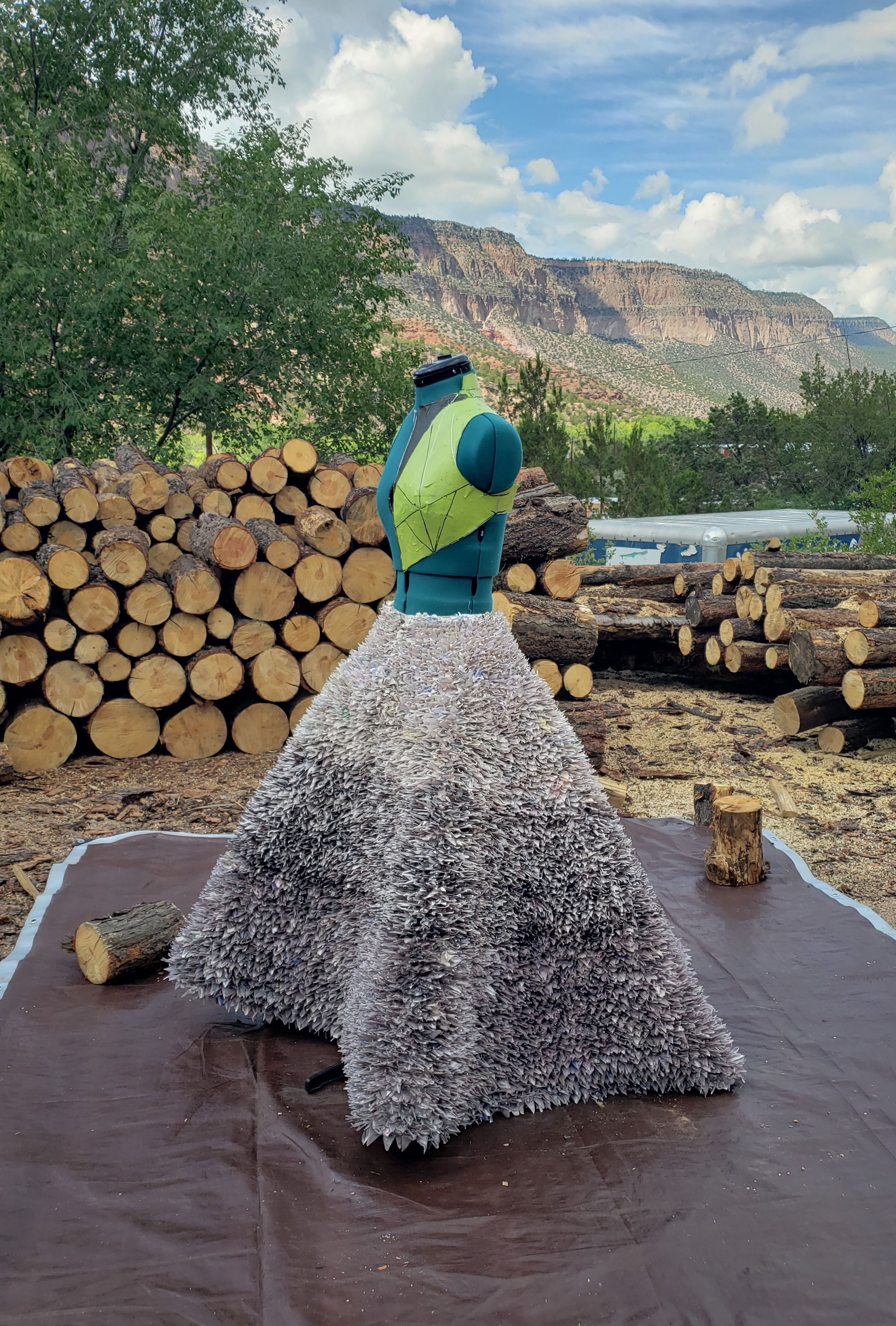
To finish my 2 year project, I used Plasti-dip to change the color of the bottom section of cranes. This part was so much fun and surreal at the same time. Watching all that hard work transform in front of me which finalized my passion project.